
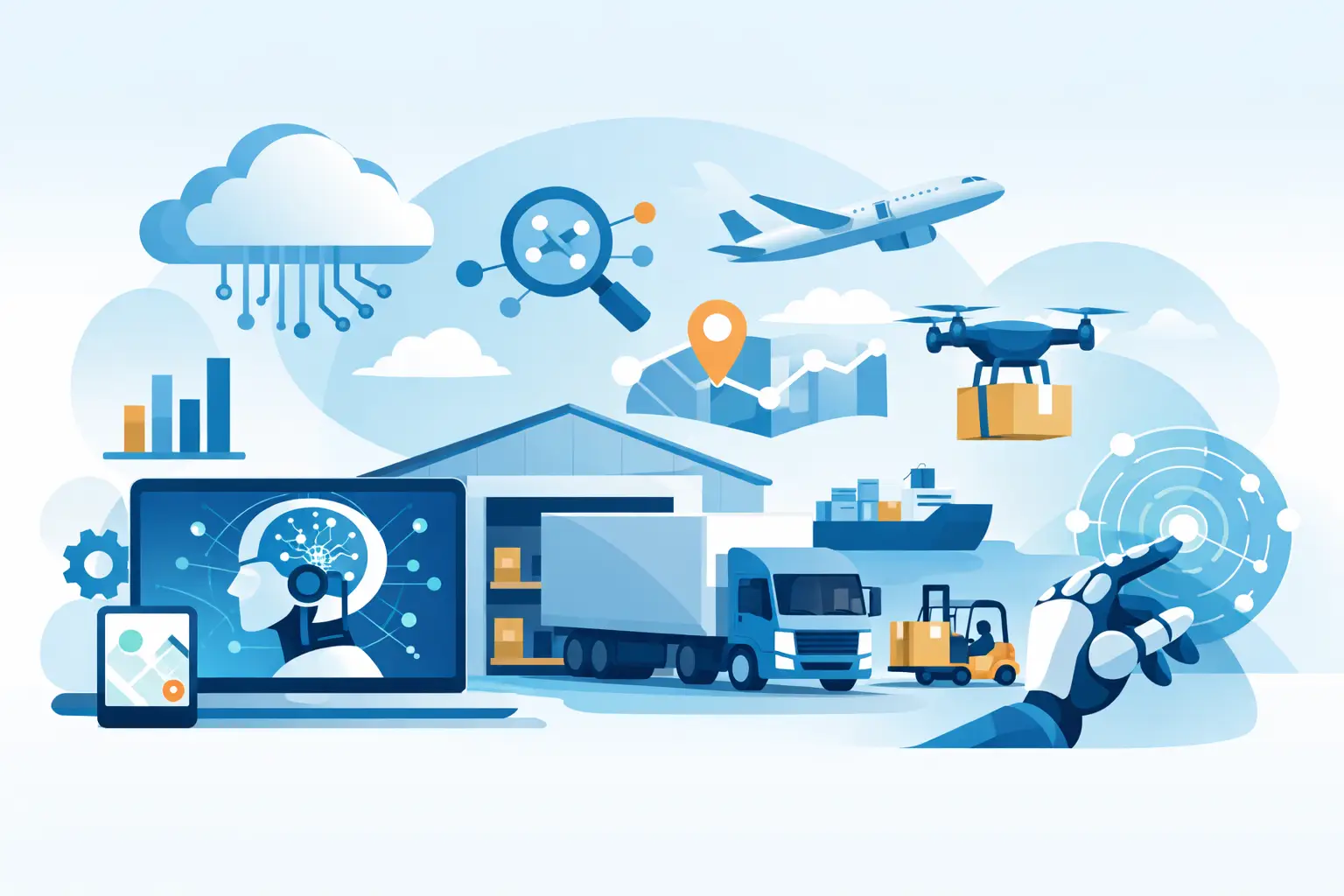
A late pickup, a missed delivery window, and a support team chasing updates across three systems - that is how small operational gaps turn into customer complaints fast. For logistics businesses, online sellers, and retail service points, saas ai is becoming less of a trend and more of a working tool for keeping daily operations under control.
The reason is simple. Most growing businesses do not need another complicated platform. They need better decisions, faster responses, and fewer manual steps inside the systems they already use. That is where software-as-a-service combined with AI starts to make commercial sense.
What saas ai actually means in operations
At a practical level, saas ai refers to cloud-based software that uses AI to improve specific business tasks. In logistics and fulfillment, that can mean predicting delivery delays, sorting support tickets, suggesting better routes, identifying order risks, or helping teams handle higher parcel volume without adding the same level of headcount.
The SaaS part matters because it lowers the barrier to adoption. Businesses do not need to build everything from scratch or maintain heavy internal infrastructure. They can access tools through subscription-based platforms, roll them out faster, and update processes as demand changes.
The AI part matters because operations generate patterns. Parcel flows, failed deliveries, customer inquiries, peak-hour congestion, return rates, and fulfillment bottlenecks all create data. When used properly, AI helps teams spot those patterns earlier and respond before a small issue becomes a service problem.
Why saas ai matters for logistics and fulfillment
Logistics runs on timing, accuracy, and volume. Even a modest increase in orders can put pressure on dispatching, customer service, packaging, and outlet operations. Many SMEs and e-commerce businesses feel this first in the form of manual work. Staff begin copying information between systems, answering repetitive questions, and making judgment calls with limited visibility.
SaaS AI can reduce that pressure in ways that are useful, not theoretical. A support tool can classify inquiries by urgency so delayed parcel cases are handled first. A routing platform can suggest more efficient delivery planning based on traffic, service area patterns, or delivery density. A fulfillment dashboard can flag unusual order spikes that may require staffing or packaging adjustments.
This does not mean AI replaces the operations team. In most real business settings, it works best when it supports human judgment. A station operator still needs to handle customers properly. A fulfillment manager still needs to decide how to allocate labor. AI simply helps them make those choices with better signals and less guesswork.
Where saas ai delivers the most value
The strongest use cases are usually the least glamorous. They sit inside routine work where teams lose time every day.
Customer support and parcel inquiries
Parcel-related support tends to be repetitive. Customers ask where a shipment is, whether a parcel is ready for collection, or why a delivery status has not changed. SaaS AI tools can help categorize these requests, draft responses, and direct more complex issues to the right staff member.
That improves response speed, but there is a trade-off. If a business relies too heavily on automation, support can feel scripted and frustrating. The better approach is to automate the first layer while keeping easy handover to a human when a case involves payment disputes, damaged parcels, or service recovery.
Delivery planning and route efficiency
Routing is one of the most obvious areas for AI support. Cloud-based systems can process historical delivery data, location clusters, traffic patterns, and time-slot performance to suggest more efficient runs.
For businesses managing last-mile or outlet-based parcel movement, this can lower wasted trips and improve delivery predictability. Still, no routing model is perfect. Local road closures, driver familiarity, weather, and building access rules can disrupt even the best suggestion. That is why operational flexibility remains important.
Demand forecasting and staffing
Retail-based logistics points, collection stations, and fulfillment centers often face uneven demand. Payday periods, campaign sales, holiday peaks, and marketplace promotions can create sudden volume swings. SaaS AI tools can analyze previous trends and help forecast likely parcel loads.
That gives operators a better chance to schedule labor, adjust storage space, and prepare packaging materials before congestion builds. Forecasting is useful, but it is never exact. Businesses still need practical buffers and local judgment, especially in markets where demand changes quickly.
Fraud checks and order risk
For e-commerce merchants and fulfillment providers, suspicious orders can create avoidable losses. AI-based tools can detect unusual order behavior, repeated failed delivery patterns, or inconsistent customer information that may signal fraud or abuse.
This is helpful, particularly when order volume becomes too high for manual review. But there is a balance to maintain. If the system is too aggressive, legitimate orders may be flagged unnecessarily, causing delays and poor customer experience.
What SMEs should watch before adopting saas ai
The promise of better efficiency is attractive, but not every SaaS AI product is worth the cost. Businesses should start by looking at operational friction, not technology for its own sake.
If your team is losing time on repetitive parcel status checks, focus there first. If missed handoffs between outlets and delivery teams are creating service issues, that is the process to improve. If fulfillment accuracy drops during sales campaigns, AI should be evaluated against that specific problem.
A good starting question is simple: what decision are we trying to improve? When that answer is clear, software selection becomes easier.
Data quality is another practical issue. AI tools depend on usable input. If shipment statuses are inconsistent, customer records are incomplete, or outlet activity is not logged properly, the output will be weak. Many businesses find that process cleanup has to happen before AI delivers meaningful value.
Integration also matters. A tool may look impressive in a demo but create extra work if it does not connect well with order systems, courier workflows, support channels, or retail point operations. The best platform is often the one that fits the existing operating model with the least friction.
SaaS AI is not only for large enterprises
There is still a common assumption that AI is mainly for major logistics players with large budgets and internal tech teams. That view is outdated. Subscription-based platforms have made many AI capabilities available to smaller operators, merchants, and service networks.
For SMEs, the benefit is not about building advanced models. It is about using practical tools to remove unnecessary manual work and maintain service quality while growing. A smaller business that responds faster, predicts parcel surges better, and reduces failed handoffs can compete more effectively without carrying enterprise-level overhead.
This is especially relevant for businesses operating across retail touchpoints, local fulfillment, self-collection, and delivery support. As parcel volume grows, complexity grows with it. SaaS AI can help organize that complexity into manageable workflows.
How to evaluate saas ai the right way
The strongest buying decisions usually come from a short pilot, not a long feature list. Start with one operational use case, define the result you want, and measure it over a realistic period.
That result might be lower response time, fewer failed delivery attempts, better pickup readiness, or improved order processing speed. If the software improves a real metric, it is worth deeper consideration. If not, it may simply be another dashboard.
It also helps to involve frontline staff early. Dispatchers, support teams, outlet operators, and fulfillment coordinators know where delays actually happen. Their feedback often reveals whether a tool will save time or add complexity.
For logistics-focused businesses, the best technology decisions are rarely the flashiest. They are the ones that make parcel movement more predictable, customer service more responsive, and growth easier to manage. That is where saas ai earns its place.
Businesses do not need to adopt everything at once. Start where operations are under the most pressure, test carefully, and choose tools that solve real problems. When the technology supports the way your team already works, improvement tends to show up where it matters most - in service quality, efficiency, and trust.