
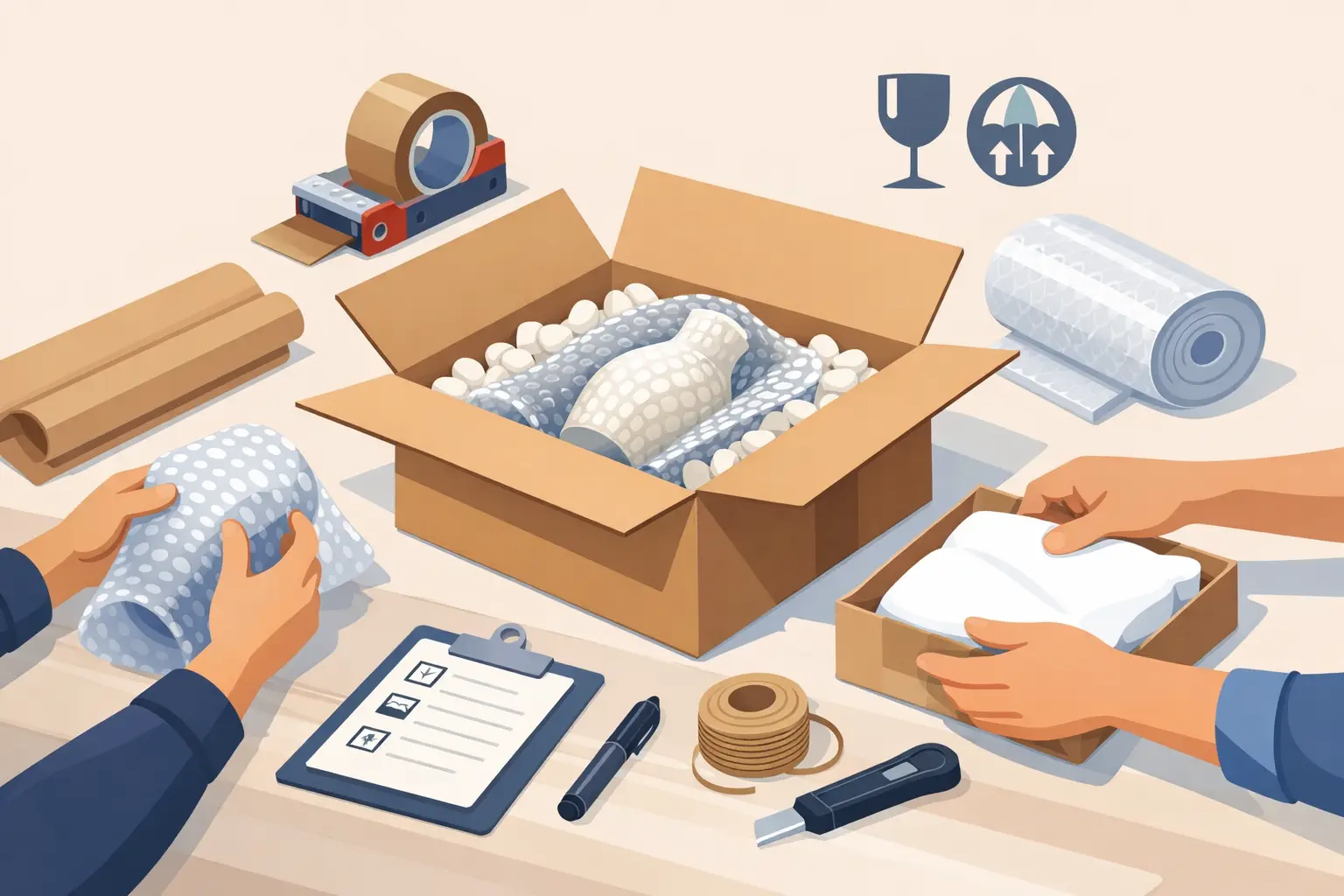
A glass bottle rattling inside a half-empty box is usually where trouble starts. If you ship products to customers, send samples to clients, or move delicate stock between locations, knowing how to package fragile parcels can save you from returns, claims, and disappointed buyers.
Fragile shipping is not just about adding more bubble wrap. It is about matching the packaging method to the item, the shipping journey, and the handling risks along the way. A ceramic mug and a framed print are both breakable, but they do not need the same box, cushioning, or sealing method. Good packing protects the item, controls movement, and gives your parcel a better chance of arriving in saleable condition.
How to package fragile parcels without guesswork
The first step is to think beyond the product itself. Ask what the parcel will likely face in transit. It may be stacked under heavier shipments, moved through sorting points, loaded into vans, or handled more than once across a long route. Fragile parcels need to survive ordinary shipping conditions, not just careful handling.
Start with the item’s weak points. Corners, handles, lids, glass edges, and protruding parts often fail first. If the item has multiple pieces, such as a teapot with a lid or a set of bottles, each part should be wrapped separately before anything goes into the box. Sending them loose together is one of the most common packing mistakes.
Your outer box matters more than many shippers realize. A box that is too thin, too large, or already soft from prior use can collapse or allow the contents to shift. Choose a strong corrugated box sized appropriately for the item and its protective layers. If there is too much empty space, the parcel may need excessive filler. If the fit is too tight, cushioning cannot do its job.
Choose the right packing materials
There is no single best material for every fragile shipment. What works depends on weight, surface sensitivity, shape, and value.
Bubble wrap is useful for many breakable goods because it absorbs impact well. It works especially well around ceramics, glassware, and small electronics, but it should be wrapped snugly and secured so it does not unwind in the box. For items with polished or easily scratched surfaces, add a soft layer such as tissue paper or foam sheet before bubble wrap so the protective material does not mark the finish.
Packing paper is better than many people expect. It is practical for filling small gaps, wrapping less delicate items, and supporting products inside the box. It is not a full replacement for cushioning around highly breakable goods, but it helps prevent movement when used properly.
Foam sheets, molded inserts, and corner protectors are often the better choice for products with regular dimensions or repeat shipments. If you are an online seller moving the same fragile SKU every week, custom-fit protection can reduce damage rates and speed up packing. It costs more upfront, but it can save labor and replacement costs over time.
Loose fill has its place, but it is less reliable for heavier fragile items. A dense object can sink through the material during transit, leaving the product underprotected. For lightweight items it may still work, but for glass, ceramics, or bottled products, structured cushioning is usually safer.
The packing method matters as much as the materials
A good fragile parcel uses layers. First, wrap the item directly. Second, cushion it inside the box so it does not touch any wall of the carton. Third, stabilize the contents so nothing shifts when the box is lifted, tilted, or set down.
As a rule, fragile items should have protective space on all sides. That buffer helps absorb drops and pressure during transport. If the item is heavy or especially delicate, increase the cushioning and consider double boxing. That means placing the wrapped item in one inner box, then placing that box inside a larger outer box with cushioning between them. It adds material and size, but for high-risk products it is often worth it.
Movement is the enemy. After packing, gently shake the box. If you hear rattling or feel shifting, reopen it and correct the issue. This quick check catches problems before they become breakage claims.
How to package fragile parcels for different item types
The right method changes with the product category.
Glass bottles and jars need firm separation and protection around the neck or lid area. If multiple bottles are packed together, they should never touch. Use dividers or individual wraps, then add cushioning around the grouped set.
Ceramics and mugs should be wrapped fully, with extra attention to handles and rims. Handles break easily because they protrude and absorb impact differently from the body of the item.
Framed items and flat fragile goods need corner protection and rigid support. A print under glass should be secured so the frame does not flex under pressure. In many cases, a flat mailer alone is not enough.
Electronics require a different balance. The goal is to protect against shock while also controlling static and pressure on sensitive parts. Manufacturer packaging is often the best base if it is still available and in good condition.
For gift sets, subscription boxes, or multi-item orders, it is worth packing the most fragile piece first, then building the rest of the arrangement around it. Presentation matters, but protection has to come first.
Labeling helps, but it is not your main protection
Many shippers rely too heavily on stickers marked FRAGILE or HANDLE WITH CARE. Labels can support better visibility, but they should not be treated as the primary defense. Parcels still move through busy operational environments, and handling may not be as gentle as intended.
Use clear labeling where appropriate, especially for orientation-sensitive items, but pack as though the label will not change the outcome. If your parcel only survives when everyone handles it perfectly, it is not packed well enough.
Cost control without underpacking
For businesses, fragile packing is a cost question as much as a quality question. More material increases shipping weight and packing expense. Too little protection increases damage, refunds, reshipments, and customer complaints. The right answer is not always maximum packaging. It is efficient packaging.
If you ship fragile products regularly, standardize your process. Use the right box sizes, approved materials, and repeatable packing methods for each product type. This reduces training time, packing errors, and wasted supplies. It also gives your operation more predictable shipping costs.
There is also a customer experience angle. Oversized boxes stuffed with filler can make a business look careless. Underpacked parcels make it look unreliable. Well-packed orders show operational discipline, and customers notice that.
For growing sellers and retail operators, it often makes sense to work with a logistics partner that understands packaging as part of the fulfillment flow, not as an afterthought. That is especially true when order volumes increase and consistency becomes harder to maintain across staff, shifts, or locations.
Common mistakes that lead to breakage
Most fragile parcel damage comes from a few preventable issues. The first is using the wrong box size. The second is wrapping the item but failing to stop internal movement. The third is reusing weak cartons that have already lost structural strength.
Another common mistake is combining heavy and delicate items in the same parcel without separation. A solid object shifting inside the box can crush or crack the more fragile product next to it. Even if both items are packed, poor weight distribution can still cause damage.
Weather is another factor people underestimate. Moisture can weaken cardboard, loosen tape, and affect labels. If the item is sensitive to humidity or leaks would create bigger problems, add a protective inner layer such as a sealed bag or wrap.
When professional packing support makes sense
Not every fragile shipment needs a custom solution. But if you are shipping high-value products, handling frequent breakage, or scaling up e-commerce operations, professional packing support can be a practical business decision.
A reliable logistics and fulfillment partner can help you choose packaging methods that fit your products, shipment volume, and delivery model. For SMEs and online sellers, this can reduce rework and improve consistency across orders. Businesses that use drop-off points, retail stations, or mixed fulfillment channels also benefit from packing processes that are easy to repeat and easy for staff to follow.
At that stage, packaging is not just a protective step. It becomes part of service quality, cost control, and brand trust.
A fragile parcel should arrive looking like someone planned the journey, not just packed the product. When your packaging accounts for movement, pressure, and real transit conditions, you protect more than the item inside. You protect the sale, the customer relationship, and the reputation that keeps orders coming back.