
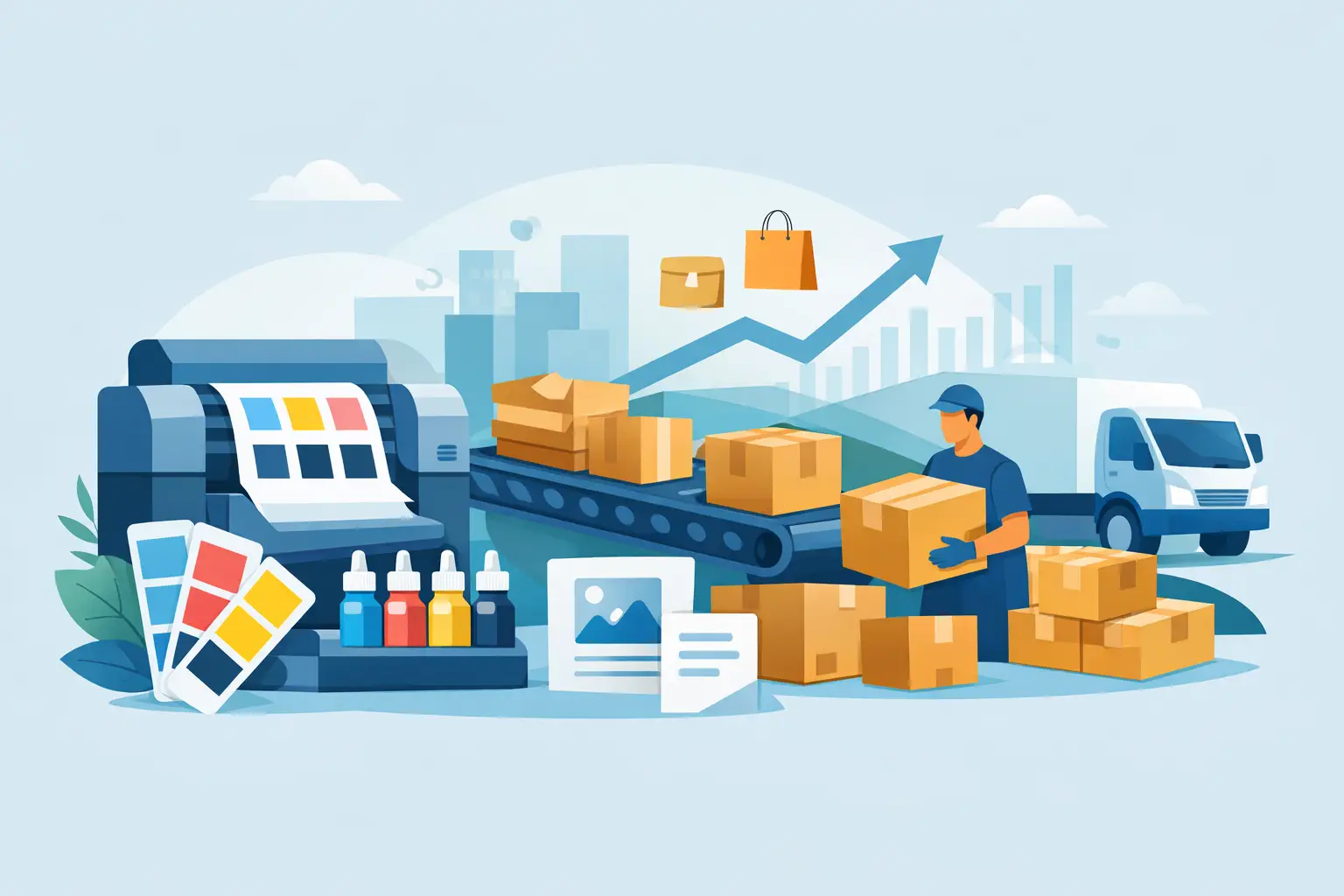
A customer notices the details before they say anything about the product. The label is easy to read. The parcel arrives intact. The packaging feels considered, not improvised. For online sellers and growing businesses, that is where printing and packaging services start to matter - not as a side task, but as part of daily operations.
For SMEs, e-commerce merchants, and retail operators, packaging does two jobs at once. It protects goods in transit, and it shapes how the business is perceived. Printing supports that same goal from another angle. Shipping labels, invoices, inserts, stickers, and branded materials all help keep fulfillment accurate while making the customer experience more consistent.
Why printing and packaging services matter in real operations
When order volume is low, many businesses patch things together. They print from a home printer, use whatever box is available, and tape over old labels. That can work for a short time. It usually stops working once sales become more regular.
The first issue is speed. If your team spends too much time printing labels, cutting paper, repacking items, or correcting address mistakes, fulfillment slows down. The second issue is damage. Products that are packed with the wrong materials are more likely to arrive broken, crushed, or wet. The third issue is presentation. Customers may tolerate basic packaging, but they notice when a business looks organized and reliable.
That is why printing and packaging services are more than support functions. They reduce avoidable errors, improve packing efficiency, and help businesses handle more orders without adding unnecessary friction.
What businesses usually need from printing and packaging services
The right setup depends on what you sell, how often you ship, and where your operational bottlenecks are. A fashion seller sending lightweight items has different needs from a merchant shipping electronics, supplements, or fragile goods. Still, most businesses tend to rely on a similar core mix of materials and printed items.
On the printing side, common needs include shipping labels, airway bills, invoices, product stickers, barcode labels, promotional inserts, and simple branded materials. These are practical items, but they directly affect picking, packing, delivery accuracy, and customer communication.
On the packaging side, businesses often need parcel bags, boxes, padded mailers, bubble wrap, tape, and void fill. Some also need custom sizing or branded packaging, especially when they want to improve unboxing without overcomplicating fulfillment.
The trade-off is usually between cost, speed, and appearance. Premium materials may improve brand presentation, but they are not always necessary for every shipment. Standardized packaging can lower handling time, but oversized boxes may raise shipping costs. The right decision is rarely about choosing the most impressive option. It is about choosing what supports your margins and service quality at the same time.
Printing and packaging services for growing sellers
Growth creates a specific kind of pressure. A business that goes from 20 orders a week to 200 often discovers that small manual tasks become expensive very quickly. Printing one label at a time, sourcing packaging from multiple places, or repacking every order differently starts to affect labor, turnaround time, and consistency.
This is where a more structured approach helps. Instead of treating printing and packaging as separate purchases, it makes sense to view them as part of one fulfillment workflow. If the label format is standardized, the packaging sizes are consistent, and the packing process is easy to repeat, the business can ship faster with fewer mistakes.
That matters even more during peak sales periods. Promotions, marketplace campaigns, and festive seasons bring volume spikes that expose weak processes. Sellers who already have practical printing and packaging support in place are usually better prepared to absorb those peaks without falling behind.
Choosing the right packaging for the product
There is no single packaging solution that suits every business. Lightweight apparel can often go into poly mailers, while cosmetics may need inner protection to prevent leakage or breakage. Documents need flat, secure handling. Fragile products need cushioning and a box with enough strength to withstand sorting and transport.
A common mistake is using more packaging than necessary. Extra layers may feel safer, but they add cost, waste space, and can increase shipping charges. The opposite mistake is under-packing, which leads to returns, refunds, and damaged customer trust.
Good packaging choices are usually based on four questions: how fragile the item is, how far it is traveling, whether it is sensitive to pressure or moisture, and how much handling it will go through. A practical provider should be able to guide businesses toward packaging that fits the product and the shipping method, rather than pushing a one-size-fits-all approach.
The role of printed materials in accuracy and branding
Printing is often treated as a basic admin function, but it has a direct effect on fulfillment quality. Clear labels reduce sorting mistakes. Accurate invoices support order checking. Barcode stickers help with tracking and inventory handling. Inserts can communicate care instructions, promotions, or repeat-purchase messages without slowing down the packing line.
Branding also comes into play here, but it should be used carefully. Branded stickers, thank-you cards, or simple printed inserts can make an order feel more polished. At the same time, businesses should avoid overbuilding these materials if the added cost does not translate into stronger retention or better customer experience.
For many SMEs, the smartest move is to start with the essentials: accurate labels, consistent documentation, and one or two branded touches that are easy to maintain. That creates a professional impression without making fulfillment harder than it needs to be.
Why convenience matters as much as materials
For many business operators, the challenge is not knowing what packaging they need. The challenge is getting it done without disrupting the rest of the business. If printing and packing require multiple vendors, extra travel, or inconsistent stock availability, operations become harder to manage.
Convenience matters because fulfillment work is repetitive. Any delay in supplies or printing support can affect order cut-off times, staff productivity, and customer expectations. That is why accessible service points and practical business support can make a real difference, especially for SMEs that do not have a large warehouse team or dedicated procurement staff.
This is where a provider with logistics experience has an advantage. When printing, packaging, and parcel handling sit close to the same operational ecosystem, businesses can solve more tasks in fewer steps. For sellers managing daily shipments, that kind of convenience is not minor. It protects time and keeps order flow moving.
What to look for in printing and packaging services
The best provider is not always the one with the widest catalog. It is the one that fits the way your business actually operates. Reliability comes first. If packaging supplies are inconsistent or print quality causes scanning issues, small problems quickly become shipping problems.
Businesses should also look for flexibility. Some need basic packaging in standard sizes. Others need support that can grow with volume, seasonal demand, or product changes. Clear service options, practical turnaround times, and straightforward support matter more than overly polished promises.
It also helps to work with a partner that understands logistics, not just printing. Packaging choices affect courier handling, storage, and delivery outcomes. A business support provider that sees the full shipment journey can usually give more useful advice than a supplier focused only on materials.
For this reason, integrated support has real value. A network-based service model like iExpress is well positioned for businesses that want operational convenience, accessible service points, and practical help that supports shipping activity, not just packaging purchases.
Printing and packaging services as part of business readiness
Strong operations rarely depend on one big change. They improve through practical decisions that remove friction from everyday work. Better labels reduce errors. Better packaging reduces damage. Better access to these services reduces wasted time.
For online sellers, retailers, and business operators, that adds up quickly. Orders go out with fewer delays. Teams spend less time fixing preventable issues. Customers receive parcels that feel secure and professional.
That is the real value of printing and packaging services. They help businesses present themselves better, ship more efficiently, and stay ready for growth without making operations more complicated than they need to be.
If your parcels are moving every day, the materials around them are not a small detail. They are part of how your business performs.