
A store can have strong products, good ads, and steady traffic, but still struggle to grow because orders go out late, stock counts are wrong, or returns pile up faster than the team can handle them. That is usually where the real question starts - what is ecommerce operations, and why does it have such a direct effect on sales, customer trust, and margin?
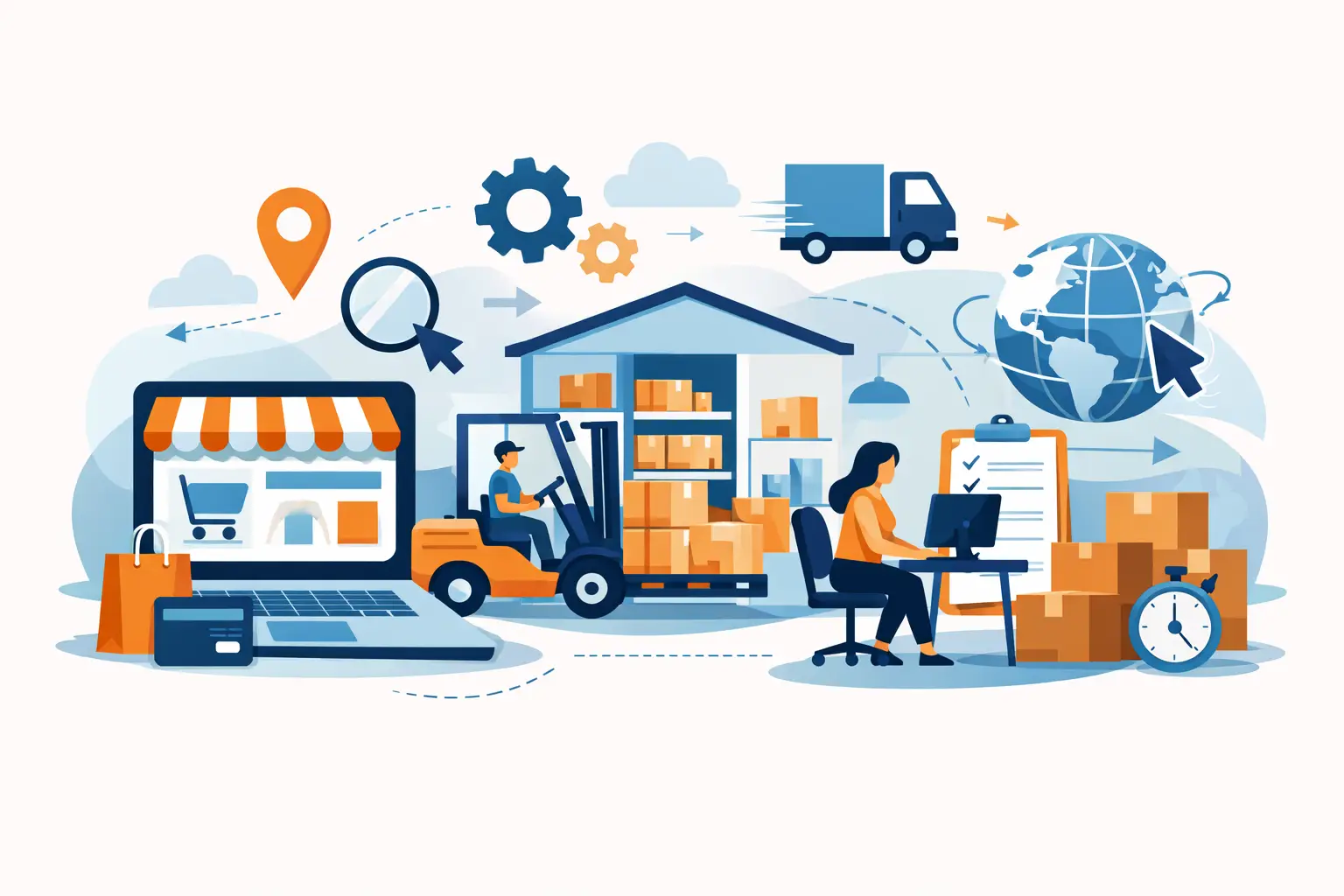
Ecommerce operations is the day-to-day system that keeps an online business running after a customer decides to buy. It covers how inventory is stored, how orders are processed, how parcels are packed and shipped, how returns are handled, and how all the moving parts are tracked across systems, people, and partners. In simple terms, it is the operational backbone behind the storefront.
For many sellers, ecommerce feels like marketing first. They focus on product listings, campaigns, pricing, and marketplace performance. Those matter, of course. But operations is what determines whether the business can deliver consistently when order volume increases, a promotion performs well, or customers expect faster service.
What is ecommerce operations in practice?
In practice, ecommerce operations sits between the customer promise and the actual delivery of that promise. If your website says an item is in stock, operations makes that true. If your checkout says delivery will take three days, operations is responsible for making that timeline realistic. If a customer wants to return an item, operations defines how easy or difficult that process becomes.
This usually includes inventory control, order management, picking and packing, shipping coordination, returns processing, packaging standards, customer communication related to delivery, and the systems used to monitor all of it. Depending on the business, it may also include supplier coordination, import and export planning, forwarding, and support for self-collection points.
That last part matters more than many growing businesses realize. Ecommerce operations is not only about moving products from warehouse shelf to customer doorstep. It is also about designing practical delivery options that fit real buyer behavior. Some customers want home delivery. Others prefer to collect parcels at a nearby retail point because it is more convenient for their schedule.
The core parts of ecommerce operations
Inventory is usually the first operational pressure point. If stock data is inaccurate, everything after that becomes harder. You may oversell products you do not actually have, delay fulfillment while searching for missing units, or tie up cash in items that do not move. Good ecommerce operations starts with knowing what is available, where it is stored, and when it needs to be replenished.
Order management comes next. Once an order is placed, the business needs a clear process for verifying payment, routing the order correctly, and making sure no order gets stuck between systems. This sounds basic, but it becomes complex quickly when a seller is handling multiple sales channels, such as a brand website, marketplaces, social commerce, and retail orders at the same time.
Fulfillment is where operations becomes visible to the customer. Picking the right item, packing it securely, labeling it correctly, and dispatching it on time are straightforward tasks on paper. In reality, small errors here create expensive consequences. A wrong item sent once can lead to replacement cost, return shipping cost, customer support time, and possible loss of repeat business.
Shipping coordination is another major piece. Sellers need to choose delivery methods that match their product type, customer location, promised delivery speed, and margin structure. Faster shipping can improve conversion, but it can also damage profitability if it is not priced properly or supported by an efficient fulfillment setup.
Returns management is often overlooked until it becomes a serious cost center. A clear returns process helps protect customer trust, but it also needs controls. Businesses need to know how returned items are received, checked, restocked, repaired, disposed of, or refunded. A loose returns workflow can create stock errors and unnecessary losses.
Why ecommerce operations matters more as you grow
A small business can sometimes run on manual effort in the early stage. The founder tracks stock in a spreadsheet, packs orders at night, and manages customer messages directly. That can work for a while. The problem is that growth exposes every weak process.
Ten orders a day may be manageable without formal systems. One hundred orders a day is different. Delays appear faster, staff make more mistakes, packaging runs out, and customer expectations become harder to meet. What looked like a sales problem may actually be an operations problem.
This is why ecommerce operations should not be treated as back-office admin. It affects revenue, customer retention, cash flow, and brand reputation. If operations is efficient, a business can scale with more confidence. If it is disorganized, growth often creates more stress than profit.
There is also a margin issue. Many merchants focus on top-line sales and underestimate how much profit gets lost through operational leakage. Failed delivery attempts, poor packaging choices, duplicate shipments, avoidable returns, and labor-heavy processes all reduce the value of each order. Good operations protects margin just as much as it supports service quality.
What good ecommerce operations looks like
Good ecommerce operations is not about having the biggest warehouse or the most complicated software. It is about consistency, visibility, and practical control.
A well-run operation usually has accurate stock records, clear fulfillment workflows, realistic shipping options, and defined exception handling when something goes wrong. Teams know who is responsible for each step. Customers receive reliable updates. Managers can spot bottlenecks before they become major issues.
It also means choosing processes that fit the business model. A seller shipping fragile items needs different packaging and handling standards than a merchant selling apparel. A business with high return volume needs a stronger reverse logistics setup than one selling low-return consumables. There is no single perfect model for every merchant.
That is where experience matters. Businesses often need operational support that fits their order profile, delivery footprint, and customer expectations, rather than a generic solution that looks efficient but creates friction in practice.
The role of technology in ecommerce operations
Technology supports ecommerce operations, but it does not replace operational discipline. A good platform can improve inventory visibility, automate order flow, generate shipping labels, and reduce manual work. That is valuable. But software alone will not fix poor packaging practices, unclear service policies, or unreliable handoffs between teams and logistics partners.
The best approach is usually to use technology to support a simple, workable process. For example, digital tools can help merchants route orders more accurately, manage parcel status, coordinate drop-off or self-collection, and track service performance across locations. That creates better control without making the operation harder to manage.
For SMEs especially, the right setup is often one that balances structure with flexibility. Overbuilding too early can waste money. Underinvesting for too long can slow the business down. The right point depends on order volume, product mix, service footprint, and growth plans.
Common ecommerce operations mistakes
One common mistake is treating fulfillment as something to fix later. By the time a seller starts missing delivery windows regularly, the damage is already visible to customers.
Another is relying too heavily on one channel or one method of delivery. Customer needs vary. Some want home delivery, while others value nearby collection points or easier drop-off access. Offering the wrong operational model can reduce convenience even if the product itself is strong.
A third mistake is failing to plan for exceptions. Lost parcels, failed delivery attempts, damaged packaging, and inventory mismatches happen in real business. Strong ecommerce operations is not built on the hope that nothing goes wrong. It is built on having clear responses when something does.
Where logistics partners fit in
Most ecommerce businesses do not need to do everything themselves. In many cases, it makes more sense to work with a fulfillment and logistics partner that can support storage, dispatch, delivery access, self-collection, and business support services under one operational structure.
That is especially useful for merchants who want broader customer reach without building their own network from scratch. A practical logistics ecosystem can give online sellers more delivery flexibility, better local access points, and easier parcel handling across different stages of the order journey. For businesses operating in fast-moving markets, that can remove a lot of friction from daily operations.
This is also why many merchants start asking more detailed operational questions as they grow. Not just how to ship faster, but how to reduce failed delivery attempts, how to support customer collection, how to improve packaging workflows, or how to manage parcel volume without stretching their internal team. Those are ecommerce operations questions.
For businesses looking at scale, the strongest setup is usually the one that combines reliable execution with customer convenience. That may include fulfillment support, retail-based parcel touchpoints, digital tracking tools, and a partner that understands both logistics and day-to-day commercial realities, which is where a network-led model like iExpress can fit naturally.
So, what is ecommerce operations really about?
At its core, ecommerce operations is about making online selling workable at the ground level. It turns a product listing into a packed parcel, a buyer promise into an actual delivery, and a growing order count into a business that can keep up without losing control.
If you run an online business, it is worth paying close attention to the operational side before problems force the issue. Strong operations does not just help you ship orders. It gives you room to grow with fewer surprises and more confidence in every order you accept.