
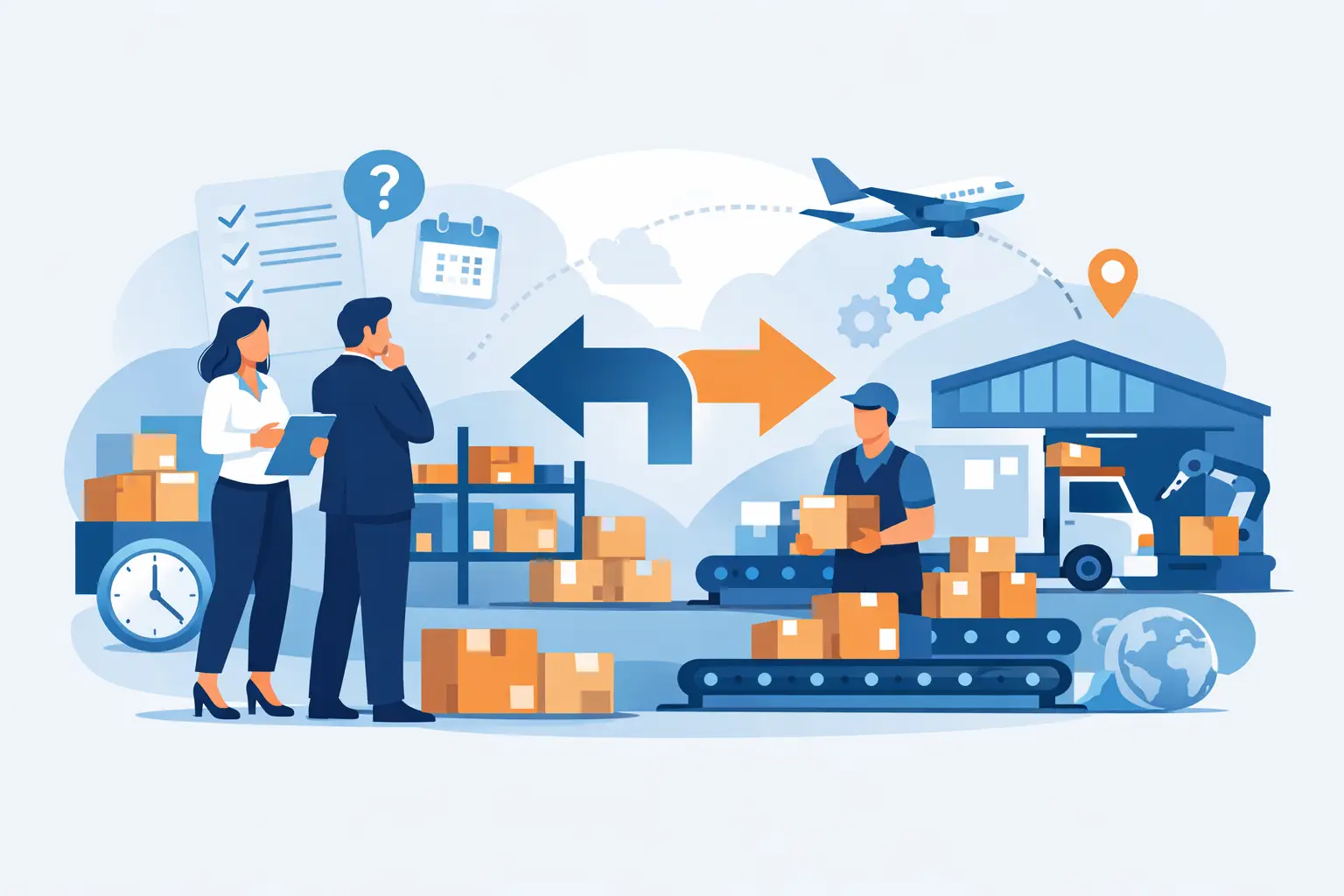
A late shipment rarely looks like a big strategic problem at first. It looks like a stack of orders on a packing table, a team staying back after hours, and a customer asking where their parcel is. That is usually when businesses start asking when should businesses outsource fulfillment - not as a theory, but because operations are beginning to strain sales.
For many SMEs and e-commerce sellers, fulfillment starts in-house for a good reason. It keeps costs visible, gives direct control over packing, and works well when order volume is still manageable. But there comes a point where self-managing storage, packing, dispatch, returns, and delivery coordination starts taking too much time away from selling, customer service, and growth.
Outsourcing fulfillment is not automatically the right move. The better question is whether your current setup is still helping the business move efficiently, or whether it is now slowing it down.
When should businesses outsource fulfillment?
The short answer is this: businesses should outsource fulfillment when logistics becomes a constraint instead of a capability. That can happen because of order volume, labor issues, storage pressure, service inconsistency, or expansion into new channels and markets.
The timing depends on the business model. A growing online seller with 30 orders a day may already be stretched if the team is small and product handling is complex. Another business may manage 100 daily orders comfortably because its products are standardized and its processes are organized. There is no single order threshold that applies to everyone.
What matters is whether fulfillment is still predictable, cost-effective, and easy to manage. Once it becomes reactive, error-prone, or difficult to scale, outsourcing deserves serious consideration.
The clearest signs your in-house setup is reaching its limit
One of the first warning signs is that fulfillment starts consuming leadership time. If the owner or core managers are spending too many hours checking stock, printing labels, fixing shipping mistakes, or answering parcel status questions, operations are taking attention away from revenue-producing work.
Another sign is inconsistent shipping performance. Orders go out later than promised, same-day dispatch becomes hard to maintain, and mistakes in picking or packing start to rise. Customers may not see your internal bottlenecks, but they feel the effect quickly through delays, wrong items, and poor communication.
Space is another common trigger. Many businesses outgrow their original setup quietly. A back room becomes a storage area, then the office becomes overflow storage, and soon the team is working around inventory instead of working efficiently. Once space starts affecting accuracy, safety, and speed, the business is paying a hidden operational cost.
Seasonal spikes also reveal a lot. A fulfillment process that works in a normal month may fail during campaigns, festive periods, or marketplace sales. If every peak period feels like damage control, your operation may not have enough flexibility to support growth.
Cost is not just rent and labor
Some businesses delay outsourcing because in-house fulfillment appears cheaper on paper. They compare a fulfillment provider's fees with warehouse rent or staff wages and assume keeping operations internal saves money. That comparison is often too narrow.
The real cost of in-house fulfillment includes packing materials, equipment, training, software, utilities, stock loss, failed deliveries, return handling, and management time. It also includes opportunity cost. If your team is tied up managing parcels, they are not focused on product development, sales, partnerships, or customer retention.
Outsourcing does add direct service fees, so it is not always the lower-cost option in every stage of a business. But it can become the smarter commercial option when it reduces errors, improves turnaround time, and allows the business to grow without adding fixed overhead too early.
Growth changes the equation
The more channels you sell through, the harder fulfillment becomes. A business that starts with one sales channel may later add its own website, social commerce, marketplaces, wholesale orders, and retail replenishment. Each channel brings different order patterns, service expectations, and inventory demands.
That complexity is often the real reason businesses outsource fulfillment. Not because they cannot pack boxes, but because coordinated fulfillment across multiple channels requires process discipline, visibility, and operational capacity.
Expansion into new geographies creates similar pressure. If you are trying to serve customers in more locations while maintaining delivery speed and customer confidence, logistics becomes a larger part of the customer experience. A reliable fulfillment partner can help businesses support that growth more efficiently than building every operational layer from scratch.
Outsourcing works best before a crisis
A common mistake is waiting too long. Some businesses only look for fulfillment support after service levels have already dropped, customer complaints have increased, or inventory control is no longer reliable. By that point, the transition feels urgent and stressful.
A better time to outsource is when the business can still plan properly. If you can already see rising order volume, storage limitations, or repeated shipping bottlenecks, it is worth reviewing fulfillment options before those issues affect customer trust.
Good fulfillment is easier to build proactively than to repair reactively. That is especially true for businesses with repeat customers, time-sensitive products, or brands that rely on strong service reviews.
When outsourcing may not be the right move yet
Not every business should outsource immediately. If your order volume is low, products need highly customized packing, or your operation depends on hands-on quality checks that are difficult to standardize, in-house fulfillment may still make better sense.
The same applies if your product range is still changing rapidly and your processes are not stable yet. Outsourcing works best when there is enough consistency for a partner to execute efficiently. If your business is still experimenting with packaging, product bundles, or basic order flow, you may benefit from tightening your own operations first.
There is also a control factor. Some founders prefer to keep fulfillment close in the early stage because it helps them understand customer behavior, return reasons, and operational issues. That can be valuable. The key is to recognize when learning from the process turns into being trapped by it.
How to decide if the timing is right
A practical decision starts with a simple review. Look at your average daily order volume, peak order volume, storage usage, shipping accuracy, labor hours, and customer complaints related to fulfillment. Then compare those figures with your growth targets for the next 6 to 12 months.
If your current setup already feels stretched, it is unlikely to support growth without additional cost or disruption. If it works well today but cannot handle a 30 to 50 percent increase in orders, that is also a signal.
It helps to ask three direct questions. Is fulfillment distracting the business from growth? Is service quality becoming harder to maintain? Will expanding in-house require more fixed investment than the business is comfortable carrying? If the answer to two or more is yes, outsourcing is probably worth serious evaluation.
What businesses should look for in a fulfillment partner
Choosing to outsource is only half the decision. The right partner should fit your business model, not force your operations into an unsuitable structure.
Start with reliability. A fulfillment partner should be able to handle inventory accurately, process orders on time, and support delivery and collection options that match how your customers buy. Visibility matters too. Businesses need practical tools to track stock, orders, and movement without chasing updates manually.
Flexibility is just as important. Many SMEs do not need a one-size-fits-all warehouse arrangement. They need a partner who understands mixed order profiles, seasonal spikes, and the need for practical support across packing, dispatch, collection, and related logistics tasks. This is where a connected operating model can make a difference. A provider such as iExpress, with both digital tools and accessible retail touchpoints, may suit businesses that want more than storage and shipping alone.
Fulfillment should support growth, not compete with it
The strongest reason to outsource fulfillment is not convenience by itself. It is the ability to run a healthier business. When fulfillment is working properly, orders move out on time, customers get clearer service, and the business can focus on selling, improving, and expanding.
That does not mean outsourcing is always the answer. It means businesses should be honest about what stage they are in and what their operation can realistically support. If your team is spending more energy managing parcels than moving the business forward, the question is no longer whether fulfillment matters. It is whether your current setup is still the right one for the next stage of growth.
A good fulfillment decision usually comes just before the pressure becomes expensive. That is often the smartest time to act.